Why You Shouldn't DIY: Professional Garage Door Spring Replacement Service
⚠️ CRITICAL SAFETY WARNING: Garage door spring replacement ranks among the most dangerous home repair tasks. This comprehensive guide explains why DIY spring work causes thousands of serious injuries annually and why professional service represents the only safe, responsible choice. Read this before even considering spring replacement—your safety and your family's wellbeing depend on understanding these critical dangers.
Every year, emergency rooms treat thousands of homeowners suffering devastating injuries from DIY garage door spring attempts: broken bones, severed tendons, crushed fingers, traumatic head injuries, and worse. These aren't freak accidents—they're predictable consequences of working with components storing tremendous energy under extreme tension. This guide explores the specific dangers, the false economy of DIY attempts, and why professional service costs far less than the alternative.
The Extreme Danger of Spring Tension
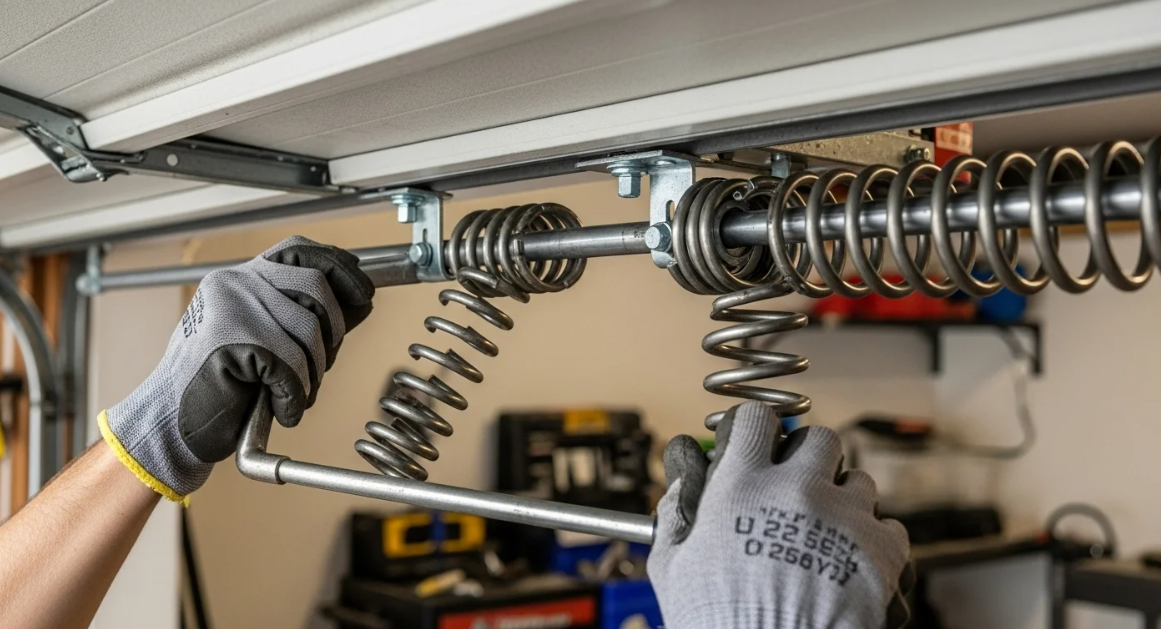
Torsion springs store enough energy to lift 150-400 pound garage doors effortlessly. This same energy, released improperly, delivers bone-breaking force capable of causing permanent disability or death. Springs remain under extreme tension even when doors are closed—approximately 200-300 pounds of force compressed into tightly-wound coils. Any mistake during winding, unwinding, or installation can release this energy catastrophically.
Consider the physics: a standard residential torsion spring stores energy equivalent to lifting several hundred pounds several feet into the air. When springs break or release unexpectedly, this energy discharges in milliseconds—far faster than human reaction time. Winding bars slip, springs snap, hardware fails—each scenario potentially catastrophic. Professional technicians undergo months of supervised training specifically because these dangers are real, immediate, and unforgiving.
DIY injury statistics paint a sobering picture: the Consumer Product Safety Commission reports thousands of garage door-related injuries annually, with spring work representing the most severe category. Common injuries include broken fingers and hands, facial trauma from springs striking heads, eye injuries causing permanent vision damage, and crushing injuries to arms and torsos. Medical costs average $10,000-$50,000+ for serious injuries, with some requiring multiple surgeries and extended rehabilitation. Understanding how to prevent accidents with regular garage door service and maintenance starts with recognizing that spring work is never safe for DIY attempts. Schedule professional spring service through our certified technician service.
Why "Tutorials" and "Guides" Are Dangerously Inadequate
Online DIY tutorials create false confidence suggesting spring replacement is achievable with basic tools and careful attention. This fundamentally misrepresents the task's complexity and danger. Videos show successful installations without revealing the specialized knowledge, tools, and experience required—or the countless attempts that ended in injury. Watching professionals doesn't transfer their months of training, muscle memory, or ability to recognize and respond to dangerous situations instantly.
Critical factors tutorials omit: proper spring selection requires calculating exact specifications matching door weight, height, track configuration, and usage patterns. Incorrect springs cause immediate operational problems and potential injuries. Proper winding technique demands specialized solid steel winding bars—never screwdrivers or makeshift tools that slip, bend, or break under tension. Spring mounting, cable routing, drum alignment, and tension calibration require precision achievable only through extensive training and experience.
Even "successful" DIY installations often create dangerous situations: incorrect tension causes doors to fall unexpectedly, improper mounting creates stress concentrations causing premature failure, and wrong spring specifications overwork openers and cables. These problems may not manifest immediately but create ticking time bombs threatening family safety. Professional installation guarantees correct specifications, proper mounting, precise calibration, and comprehensive safety verification. Learn about how regular garage door service can save you time and money compared to repeated DIY attempts and injury costs. Request professional installation through our online booking system.
The False Economy of DIY Spring Replacement
DIY attempts appear financially attractive initially: springs cost $50-$100, while professional service runs $150-$350 including parts, labor, and system inspection. However, this comparison ignores critical factors making DIY far more expensive long-term. Consider total costs: specialized tools (proper winding bars, vise grips, ladder, safety equipment) add $100-$200. Time investment—researching, purchasing parts, attempting installation—easily exceeds 4-8 hours for first attempts.
Real costs emerge when things go wrong: incorrect spring specifications require purchasing replacement springs ($50-$100+), damaged components from installation mistakes (cables, drums, tracks, opener) cost $100-$500+ to replace, and injuries requiring medical attention average $10,000-$50,000+ for emergency room visits, surgery, rehabilitation, and lost work time. Even minor injuries—crushed fingers, strained backs, cuts requiring stitches—cost thousands in medical bills and lost productivity.
Professional service eliminates these risks entirely while providing warranties protecting your investment. If springs fail prematurely or installation issues arise, repairs cost nothing within warranty periods. Professional liability insurance protects you from injury-related costs—DIY attempts leave you financially exposed to medical bills, lost income, and potential permanent disability expenses. Understanding the comprehensive torsion spring replacement process professionals follow reveals complexity justifying their expertise. Compare costs through our detailed professional estimate service.
What Professional Service Actually Provides
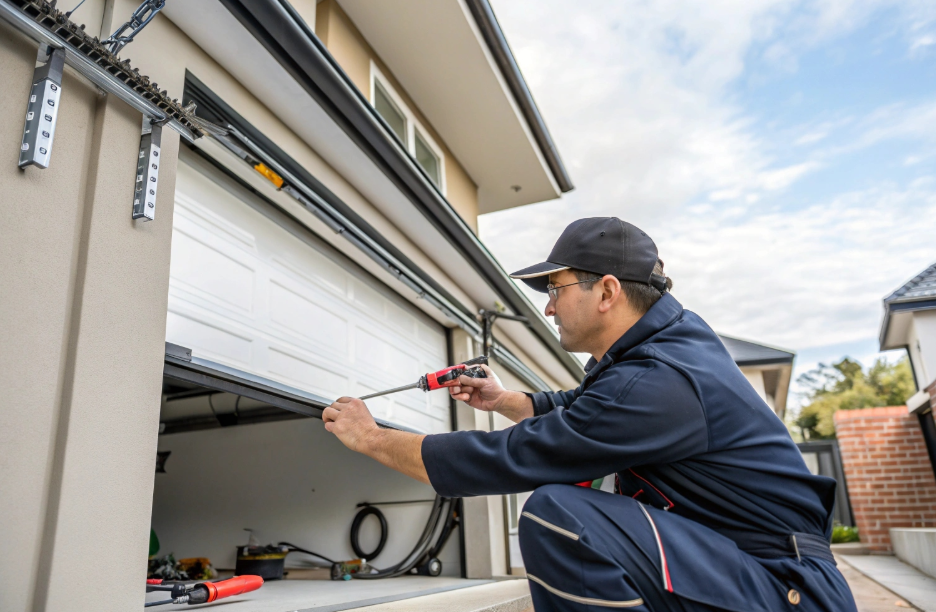
Professional spring replacement delivers value far exceeding simple component installation. Certified technicians arrive with comprehensive knowledge: exact spring specifications for your specific door model, proper winding techniques ensuring safe tension application, and complete system integration verifying all components work together correctly. They carry specialized equipment homeowners don't own: solid steel winding bars sized for your springs, calibrated tension gauges measuring exact force, and professional-grade safety equipment.
Comprehensive service includes system inspection identifying related problems before they cause failures. Technicians examine cables for fraying, drums for wear, bearings for damage, tracks for alignment, and openers for proper function. This holistic approach prevents future emergencies while ensuring your entire system operates safely. They also verify all safety features function correctly: auto-reverse mechanisms, photoelectric sensors, emergency releases, and manual disconnect systems.
Installation quality ensures maximum spring lifespan and optimal performance. Proper mounting eliminates stress concentrations, correct winding achieves precise tension without overstressing components, and accurate calibration balances doors perfectly. Professional expertise achieves results impossible for DIY attempts—results you'll appreciate daily through smooth, quiet, reliable operation. Understanding how to extend the life of your garage door springs includes professional installation quality. Schedule professional service through our comprehensive maintenance program.
Real Stories: When DIY Goes Wrong
Emergency room doctors share consistent patterns in DIY garage door injuries. A common scenario: homeowner attempts spring winding using screwdrivers instead of proper winding bars. The screwdriver slips under tension, and the spring releases energy instantly—the bar strikes the person's face causing severe facial fractures, broken teeth, and eye injuries. Recovery requires multiple surgeries, months of rehabilitation, permanent scarring, and sometimes permanent vision loss.
Another frequent injury pattern involves springs breaking during amateur installation. Without proper safety positioning and equipment, the breaking spring whips around striking the installer or bystanders. These high-velocity metal coils cause deep lacerations, bone fractures, and crushing injuries. One homeowner suffered multiple broken ribs and internal injuries requiring emergency surgery—medical bills exceeded $75,000, and recovery took over a year.
Even "successful" DIY installations create dangers. One family's improperly-tensioned springs failed after six months—the door fell while a vehicle was entering the garage, crushing the hood and narrowly missing the driver. Another homeowner's incorrect spring selection overstressed the opener motor, which burned out during operation causing garage damage from smoke and fire. These scenarios represent preventable disasters resulting from attempting professional-level work without proper training. Learn when to call for garage door repair to avoid these dangerous situations. Contact our professional emergency assistance for immediate help.
Professional Credentials and Why They Matter
Professional garage door technicians undergo extensive training and certification processes. Initial training typically includes 3-6 months of classroom instruction covering spring physics, door mechanics, safety protocols, and system integration. This academic foundation precedes hands-on training under experienced supervisors—another 3-6 months learning proper techniques, safety procedures, and troubleshooting skills. Only after demonstrating proficiency do technicians work independently.
Continuing education keeps professionals current on new technologies, updated safety standards, and advanced techniques. Many hold certifications from industry organizations like the International Door Association (IDA) or manufacturers' specialized training programs. These credentials represent thousands of hours of training and practical experience—knowledge impossible to gain from watching YouTube videos or reading online guides.
Professional liability insurance protects homeowners from injury-related costs while guaranteeing proper insurance coverage for any property damage during service. Licensed, bonded, and insured technicians provide legal protections DIY attempts completely lack. If anything goes wrong during professional service—extremely rare given their expertise—you're fully protected. DIY attempts leave you personally liable for all consequences. Understanding garage door spring replacement cost in context of professional credentials reveals true value. Verify our credentials through our professional consultation service.
Conclusion: Your Family's Safety Is Non-Negotiable
Garage door spring replacement is not a DIY project—it's a specialized trade requiring professional expertise, proper tools, and comprehensive training. The extreme danger springs present, combined with the technical complexity of proper installation, makes DIY attempts recklessly dangerous regardless of mechanical aptitude or careful attention. Professional service costs $150-$350—a fraction of medical expenses from DIY injuries averaging $10,000-$50,000+ or the emotional cost of permanent disability.
Protecting your family means recognizing your limitations and respecting dangerous situations requiring expert intervention. No amount of money saved justifies risking serious injury or death. Professional technicians exist specifically because spring replacement demands specialized knowledge and experience achievable only through extensive training. By choosing professional service, you ensure safe installation, optimal performance, comprehensive warranties, and most importantly—you protect yourself and your loved ones from preventable tragedy. Don't become another injury statistic. Choose professional spring replacement service every single time.
Our Services