
Troubleshooting Garage Door Opener Repair: Can It Be Fixed Before Replacing the Springs?

A few winters back, I got a call from a homeowner in Green Bay who told me, "My garage door opener's dead — it won't lift the door anymore." It was snowing hard that day, the kind of heavy, wet snow that clings to everything.

When I arrived, the opener was humming weakly, struggling against a door that refused to move. I hit the wall button, heard the same low groan, and stopped immediately. What I found wasn't an electrical issue — it was a broken torsion spring.

The opener wasn't the problem at all. In fact, it was doing everything it could to lift a load it was never designed to handle. That moment reminded me how often garage door opener issues are really symptoms of deeper mechanical problems — not the opener itself. So today, I want to share the truth about how to troubleshoot opener problems, what to check before replacing your springs, and when a simple fix can save you from a costly replacement.

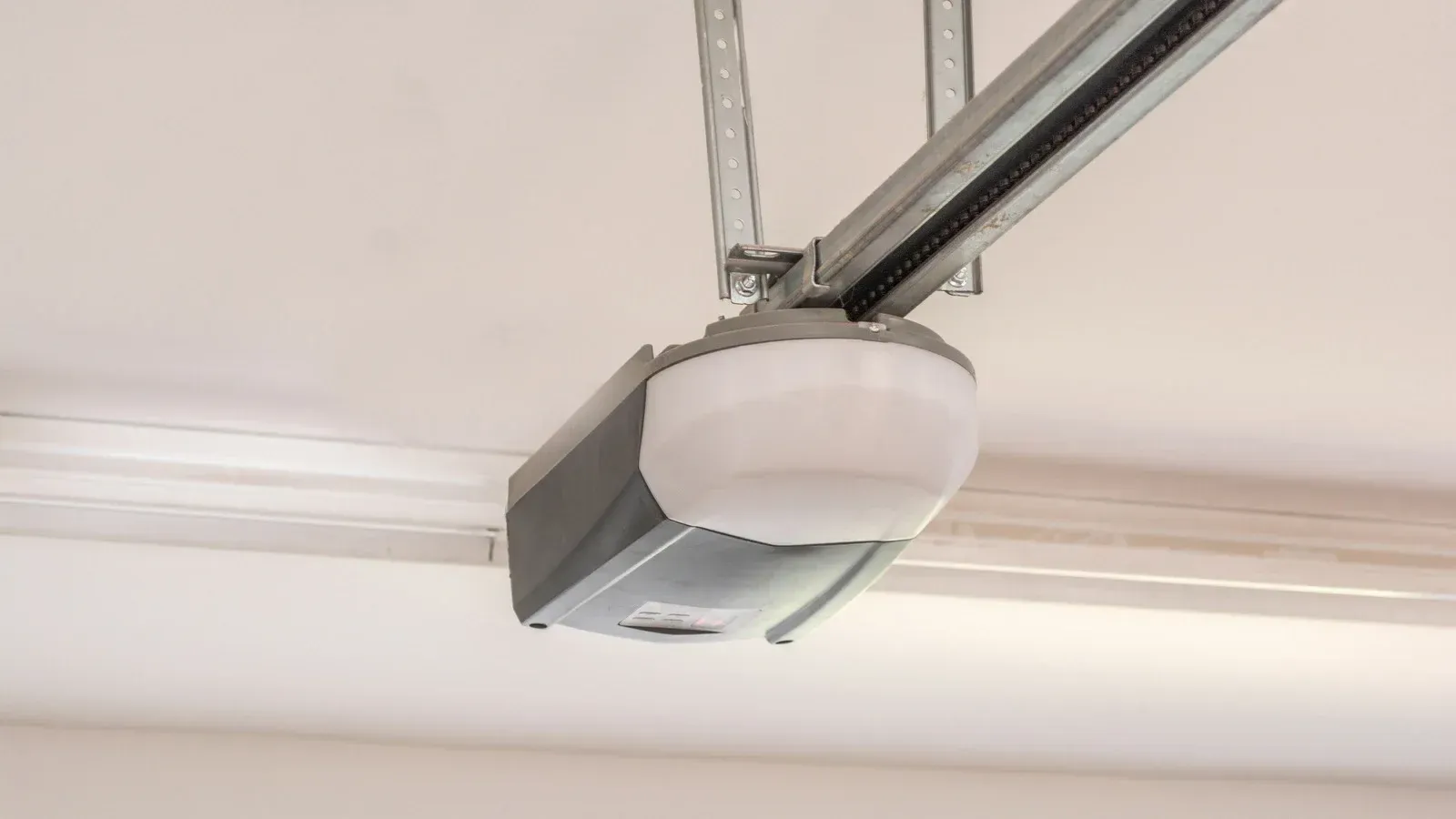
Close-up of a ceiling-mounted garage door opener with rail and white light cover

Understanding the Relationship Between Your Opener and Springs

Let's start with a little-known fact that even some handymen overlook: Your opener doesn't lift the door — your springs do. The opener simply guides the motion, controlling when and how the door moves. The torsion or extension springs bear the actual weight, creating the counterbalance that makes the door feel light.

When the springs weaken or break, your opener suddenly finds itself trying to do a job it's not built for — lifting 150–250 pounds of dead weight. That's why one of the first steps in opener troubleshooting is to check the mechanical balance of your door before assuming the motor or logic board is at fault. Understanding expert tips for garage door opener repair helps you diagnose the real issue.

Step 1: Check the Balance (No Tools Needed)

You can safely perform this quick balance test yourself: Unplug the opener, pull the red emergency release cord to disconnect it from the door, lift the door manually halfway. If it stays in place, your springs are fine. If it falls, your springs are weak or broken.

This simple check eliminates a lot of guesswork — and it tells you whether your "opener problem" is actually a spring issue in disguise. I once had a client who replaced their opener twice in five years before realizing the imbalance was eating through each motor. Once we replaced and recalibrated the torsion springs, that same opener worked perfectly for another decade. Learn more about how to spot when your garage door springs need replacing.

Step 2: Listen for the Clues Your Opener Gives You

Every garage door opener "talks" before it fails. Here's what to listen for and what those sounds often mean:

  • Grinding or Straining: Usually the motor or gear assembly is overworking — often due to spring imbalance
  • Clicking but No Movement: The logic board is sending a signal, but the motor isn't responding — possible electrical failure
  • Stops Midway: This can be limit switch misalignment, obstruction sensors, or spring tension problems
  • Humming Without Movement: Almost always tension imbalance — the opener can't overcome the load

Whenever I hear that low hum with no motion, I know it's time to check springs first. Discover what common garage door noises mean for repairs to better diagnose your system.

When Repair Makes Sense vs. When Replacement Is Smarter

Not every opener problem requires replacement. Here's my rule of thumb: If your opener is under 10 years old, it's usually worth repairing. Modern openers, especially belt-drive and chain-drive systems, are built to last 15–20 years with proper maintenance.

However, if your springs are the issue, that's a different calculation. Torsion springs typically last 10,000–15,000 cycles (about 7–10 years for most households). When they fail, replacing them is almost always more cost-effective than replacing the entire opener system.

The key is accurate diagnosis. Before making any decisions, understand when to call for garage door repair versus attempting DIY fixes. If you're dealing with both aging springs AND an old opener, that might be the time to consider a full system upgrade for better efficiency and safety.

Conclusion

The relationship between your garage door opener and springs is critical to understanding how your system works. Most "opener failures" are actually spring failures in disguise. By performing a simple balance test, listening to the sounds your system makes, and understanding when repair makes more sense than replacement, you can save hundreds of dollars and extend the life of your garage door system.

Remember: Your opener is only as good as the mechanical foundation supporting it. Keep those springs maintained, and your opener will thank you with years of reliable service.

Man stands with hands on head as a garage door buckles inward under impact.
May 20, 2026
Essential questions to ask garage door repair De Pere technicians. Learn about experience, licensing, warranties, and emergency service options.
May 20, 2026
Learn how Wi-Fi and belt-drive garage door systems are transforming Green Bay homes with smart technology, enhanced security, and quiet operation for modern living.
Modern house exterior with a large gray garage door and driveway under a blue sky
May 20, 2026
Discover why belt-drive Wi-Fi openers are the smart choice for Green Bay homes. Learn about quiet operation, smart integration, and security features.
May 20, 2026
Learn how garage door springs work to counterbalance your door's weight, reducing strain on the opener and extending system lifespan with proper maintenance.
Garage door opener rail and hanging cord mounted on the ceiling
May 20, 2026
Garage door springs are essential for safety and security. Learn how they prevent accidents and protect your home from unauthorized access in this comprehensive guide.
Worker installing a garage door opener on a ceiling track, using a drill beside an orange ladder.
May 20, 2026
Learn what happens when garage door springs fail, including sudden malfunctions, opener damage, and secondary system issues. Expert repair solutions from WI Garage Door LLC.
Worker adjusting a garage door opener rail with a red string guide
May 20, 2026
Identify worn garage door springs early with these key warning signs: slow movement, strange noises, visible damage, and difficulty opening.
May 20, 2026
Expert tips for garage door cable replacement including understanding cables, safety considerations, step-by-step replacement guide, and testing procedures for smooth operation.
Show More
Man stands with hands on head as a garage door buckles inward under impact.
May 20, 2026
Essential questions to ask garage door repair De Pere technicians. Learn about experience, licensing, warranties, and emergency service options.
May 20, 2026
Learn how Wi-Fi and belt-drive garage door systems are transforming Green Bay homes with smart technology, enhanced security, and quiet operation for modern living.
Modern house exterior with a large gray garage door and driveway under a blue sky
May 20, 2026
Discover why belt-drive Wi-Fi openers are the smart choice for Green Bay homes. Learn about quiet operation, smart integration, and security features.
Show More