DIY Garage Door Repair Safety Tips: Protecting Yourself While Fixing Your Door
⚠️ CRITICAL SAFETY WARNING: This comprehensive guide provides educational information about garage door repair safety. While some maintenance tasks are safe for homeowners, many repairs—especially spring-related work—are extremely dangerous and must only be performed by certified professionals. Read this guide to understand what you can safely do yourself and when you absolutely must call experts.
Garage door systems involve high-tension components, heavy panels, electrical systems, and complex mechanical assemblies. Understanding proper safety protocols protects you from serious injury while helping you maintain your door effectively. This guide covers essential safety practices for any garage door work.
Understanding Garage Door Dangers
Garage doors are the largest moving objects in most homes, weighing 150-400 pounds and operating under extreme mechanical tension. Springs store enough energy to cause fatal injuries if released improperly. Cables bear thousands of pounds of force. Panels can crush fingers, limbs, or worse if they fall unexpectedly.
The primary danger zones include: torsion springs (extreme tension capable of bone-breaking force), bottom brackets where cables attach (high stress concentration points), tracks and rollers (pinch points and sharp edges), and the door itself (heavy panel that can fall without warning if springs fail). Understanding these hazards is the first step toward safe garage door work.
Professional technicians receive months of supervised training specifically because garage door repair ranks among the most dangerous home maintenance tasks. Thousands are hospitalized annually from DIY garage door accidents—many suffering permanent disabilities. This isn't meant to frighten you but to emphasize taking these safety guidelines seriously. Learn how to prevent accidents with regular garage door service and maintenance through proper safety practices. For professional safety inspections, visit our safety inspection service page.
Safe DIY Maintenance Tasks
Several maintenance tasks are completely safe for homeowners when performed correctly. Monthly visual inspections require no tools or physical contact with dangerous components. Look for frayed cables, gaps in spring coils, loose hardware, rust formation, and track misalignment. These inspections identify problems early without any safety risk.
Balance testing reveals spring condition safely. Disconnect the opener by pulling the emergency release cord. Manually lift the door halfway and gently release it. If it stays in place, springs are balanced. If it falls or rises, they need professional attention. This test involves no spring manipulation—just observing door behavior.
Regular lubrication is safe and beneficial. Every six months, apply silicone-based spray lubricant to rollers, hinges, and tracks. Never use WD-40—it attracts dirt and degrades over time. For torsion springs, professionals can apply lubricant during service visits, but homeowners should not directly handle springs. Discover how regular garage door service can save you time and money through preventive maintenance. Schedule regular maintenance through our preventive maintenance program.
Tasks That ALWAYS Require Professionals
SPRING REPLACEMENT - NEVER DIY: This is the most dangerous garage door repair. Torsion springs store tremendous energy under extreme tension. DIY spring replacement causes thousands of serious injuries annually, including fatalities. Professional spring replacement costs $150-$350—minimal compared to medical bills from DIY accidents averaging $10,000-$50,000+. This is non-negotiable: always hire certified professionals for spring work.
CABLE REPLACEMENT - PROFESSIONAL RECOMMENDED: While technically possible for skilled homeowners, cable replacement requires releasing spring tension first—bringing you back to the spring danger. Improper cable routing causes premature failure or door collapse. Professionals complete cable replacement safely with proper spring handling and tension adjustment.
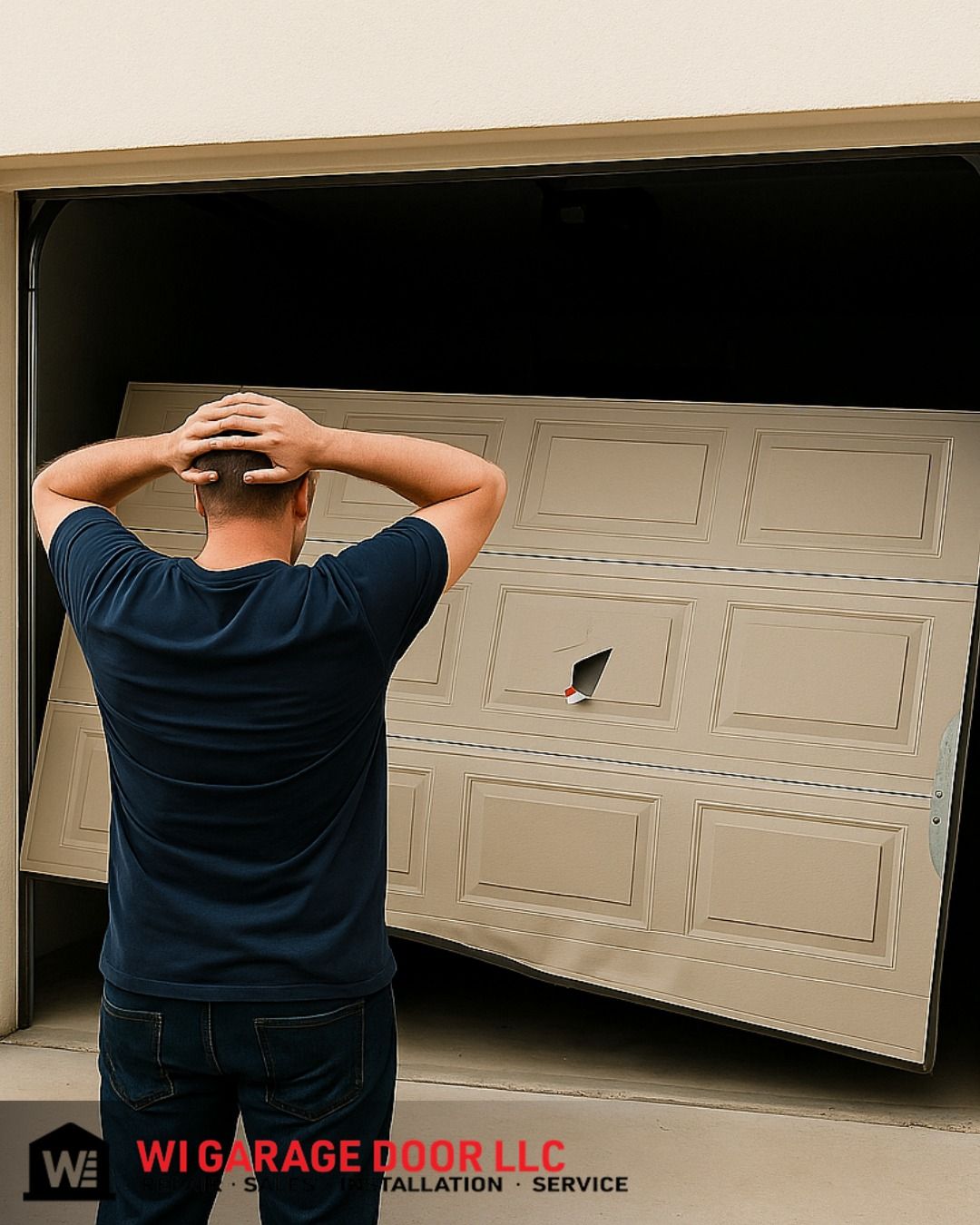
DOOR OFF TRACK - IMMEDIATE PROFESSIONAL HELP: If your door comes off its tracks, stop immediately and call professionals. Attempting to force it back on track can cause the door to fall, causing serious injury or property damage. Emergency services respond quickly to these situations. Contact our 24/7 emergency repair service immediately.
BROKEN SPRINGS - EMERGENCY PROFESSIONAL SERVICE: If you hear a loud bang from your garage, a spring likely broke. Do not attempt to open or close the door—even manually. The full door weight could cause injury. Call professionals immediately for emergency service. Understanding when to call for garage door repair includes recognizing these emergency situations.
Essential Safety Equipment
Even for safe DIY tasks, proper equipment protects you from minor injuries. Safety glasses prevent debris from entering eyes during inspections or cleaning. Heavy work gloves protect hands from sharp edges, splinters, and pinch points. A sturdy ladder rated for your weight plus tool load ensures stable access to upper components.
For any electrical work (testing sensors, checking opener connections), always disconnect power at the breaker—never just unplug the unit. Use a voltage tester to verify power is off before touching any electrical components. Keep a flashlight handy for inspecting dark areas without awkward positioning near dangerous components.
What you should NEVER use as "tools": screwdrivers for winding springs (extremely dangerous—professionals use solid steel winding bars), makeshift supports instead of proper stands, ladders on uneven ground, or any improvised equipment for spring work. Professional technicians invest in specialized tools specifically designed for safe garage door work. For comprehensive service with proper equipment, explore our professional repair services.
Working Safely Around the Door
When performing any garage door work, establish a safe work zone. Clear the area beneath and around the door. Remove vehicles, tools, and other objects that could cause tripping or obstruct emergency egress. Never work alone on any task involving the door mechanism—have someone nearby who can call for help if needed.
Keep children and pets away from the work area entirely. Garage doors fascinate children, but the danger is real. Establish clear boundaries and explain why the garage is off-limits during any maintenance or repair work. Consider locking the garage or posting signs during work sessions.
Never put any body part beneath a raised door unless it's properly supported with sturdy stands designed for this purpose. Even with the opener disconnected, spring failure can cause the door to fall without warning. If you must work beneath the door, use vice grips or C-clamps on the tracks to prevent unexpected movement, though this doesn't replace proper stands for major work.
Emergency Procedures and When to Stop
Know when to stop immediately and call professionals. If you hear unusual loud noises (snapping, popping, grinding), see visible damage to springs or cables, notice the door falling or operating unevenly, or feel uncertain about any step in a repair process—stop immediately. Continuing despite warning signs causes most DIY accidents.
If someone is injured during garage door work, call 911 immediately. Don't attempt to move them unless they're in immediate danger from the door. Garage door injuries often involve crushing, which can cause internal injuries not immediately apparent. Professional medical assessment is essential.
Keep emergency contact information readily available: your local professional garage door service, poison control (for chemical lubricants or cleaners), and emergency services. Post these numbers visibly in your garage. Having them ready eliminates fumbling during actual emergencies. Save our contact information: Emergency Service Contact.
Teaching Safe Practices to Family Members
Everyone in your household should understand basic garage door safety. Teach children never to play near the door, ride the door, or press the opener button as a toy. Explain that garage doors are powerful machines, not playground equipment. Demonstrate the emergency release cord's location and purpose (for adults) in case someone gets trapped.
Adults should know how to manually open the door if power fails, but understand this should only be done if springs are functional. If springs are broken, the door will be extremely heavy and dangerous to lift manually. In such cases, use another exit and call professionals rather than risking injury.
Regular family safety discussions reinforce these practices. As children grow and become more independent, ensure they understand garage door dangers before they're old enough to operate vehicles or work in the garage unsupervised. Understanding why automatic garage door repair is essential for home safety emphasizes the importance of professional maintenance.
Conclusion: Safety First, Always
DIY garage door repair safety boils down to knowing your limits and respecting the dangers inherent in these systems. Safe maintenance tasks—visual inspections, balance testing, and basic lubrication—help you maintain your door without risk. But complex repairs, especially anything involving springs, cables under tension, or doors off tracks, demand professional expertise.
The money you might save through DIY spring replacement isn't worth the risk of serious injury or death. Professional services cost a fraction of medical bills from DIY accidents and provide warranties, insurance protection, and guaranteed safe operation. When in doubt, always err on the side of caution and call certified professionals. Your safety and your family's wellbeing are worth far more than any repair cost. Request professional service through our online service request form.
Our Services