
The Science Behind Garage Door Repair: Exploring Spring Mechanics

Understanding the science behind garage door spring mechanics provides fascinating insight into the engineering principles that make modern garage doors function safely and efficiently. From the physics of torsion force to the metallurgy of spring materials, these systems represent sophisticated mechanical engineering applied to everyday home convenience.

This comprehensive exploration examines how springs store and release energy, why different spring types suit different applications, and what factors determine spring lifespan and performance. While this knowledge is educational and intellectually rewarding, it should reinforce—not encourage—the critical importance of professional service for all spring-related work.

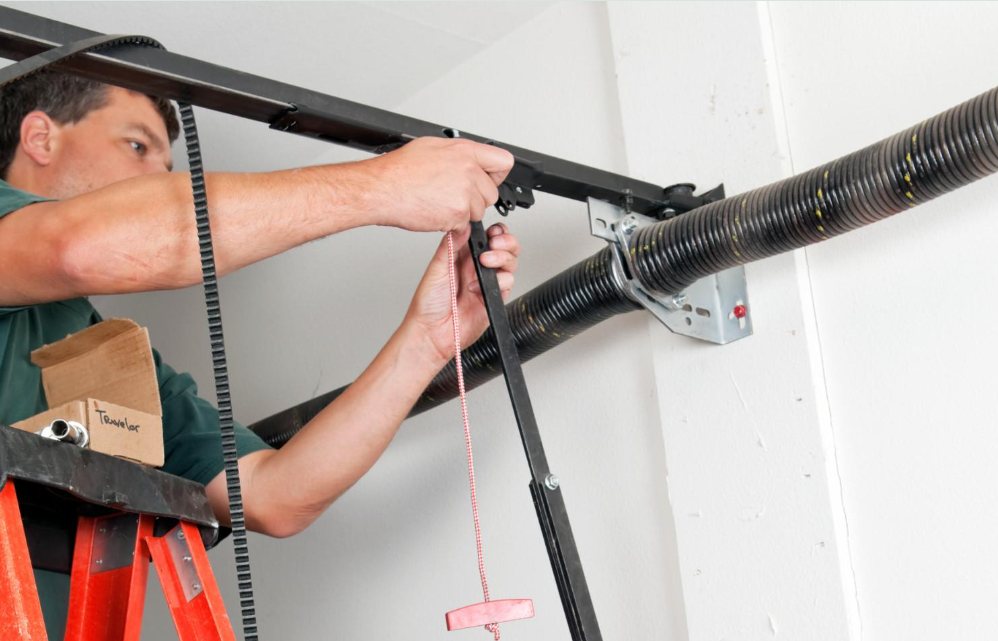
Worker adjusting a garage door opener with tools near a black track and coiled cable

The Physics of Torsion Springs

Torsion springs operate on principles of rotational physics, storing mechanical energy through twisting force applied around a central shaft. When wound, the spring's coils tighten, creating potential energy proportional to the number of turns and the spring's material properties. This stored energy counterbalances the door's weight, enabling smooth operation with minimal motor assistance.

The fundamental equation governing torsion springs is torque equals the spring constant multiplied by angular displacement. In practical terms, this means the energy stored increases linearly with each quarter-turn of winding. Professional technicians calculate exact winding requirements based on door weight, height, and spring specifications—typically 7-9 quarter-turns per foot of door height.

Spring diameter, wire gauge, and material composition all affect the spring constant, determining how much force the spring can safely store. Larger diameter springs with thicker wire gauge provide greater lifting force but require more physical space. Understanding the different types of garage door springs for replacement reveals how these principles apply to various door configurations.

Extension Spring Mechanics

Extension springs function through elastic deformation, stretching along the door's horizontal tracks as it closes and contracting as it opens. Unlike torsion springs that store energy through rotation, extension springs store it through linear elongation. Hooke's Law governs their behavior: force equals the spring constant multiplied by displacement.

These springs typically mount on both sides of the door, with safety cables running through their centers to contain broken springs and prevent dangerous projectile motion. While simpler in design than torsion systems, extension springs experience more stress concentration at mounting points, contributing to shorter lifespans (10,000-15,000 cycles versus 15,000-30,000 for torsion springs).

The mechanical advantage of extension springs lies in their simplicity and lower initial cost. However, their exposed position along tracks makes them more vulnerable to environmental factors like temperature fluctuations and humidity, accelerating wear patterns. Professional installation ensures proper safety cable integration and mounting techniques that maximize lifespan.

Material Science and Spring Longevity

Garage door springs are manufactured from high-carbon steel wire, carefully heat-treated to achieve optimal strength-to-flexibility ratios. The metallurgical process involves heating wire to specific temperatures, then rapidly cooling (quenching) to create hard, resilient crystalline structures. Tempering follows, reducing brittleness while maintaining strength.

Wire diameter directly impacts spring performance and lifespan. Thicker wire (larger gauge numbers indicate thinner wire—it's counterintuitive) provides greater strength and longer service life. High-cycle springs use premium steel alloys with enhanced fatigue resistance, explaining their 2-3x longer lifespans despite higher initial costs.

Coating technologies protect springs from corrosion, extending operational life. Galvanized coatings, powder coatings, and specialized anti-rust treatments each offer different protection levels. Professional-grade springs often feature multiple protective layers, justifying premium pricing through dramatically extended service intervals. Learn about how to extend the life of your garage door springs through proper maintenance and environmental protection.

Stress Cycles and Fatigue Failure

Spring failure occurs through metal fatigue—the gradual weakening of material subjected to repeated stress cycles. Each opening-closing cycle stresses the spring, creating microscopic cracks that propagate over time. Eventually, these cracks reach critical size, causing catastrophic failure—the loud "bang" homeowners hear when springs break.

Cycle ratings predict spring lifespan based on typical residential usage (3-4 cycles daily). Standard 10,000-cycle springs last approximately 7-10 years, while 25,000-cycle springs extend this to 15-20 years. However, actual lifespan varies based on usage frequency, environmental conditions, and maintenance quality.

Temperature extremes accelerate fatigue. Springs in uninsulated garages experience greater thermal stress than those in climate-controlled environments. Rapid temperature changes cause expansion-contraction cycles independent of door operation, effectively increasing total stress cycles beyond simple open-close counts. Understanding garage door spring replacement cost in context of cycle ratings helps homeowners choose appropriate quality levels.

Professional Calibration and Balance

Proper spring calibration requires precise tension adjustment that DIY attempts cannot achieve. Professional technicians use specialized tools to measure spring torque, ensuring exact counterbalance matching door weight. Even slight miscalibration causes premature wear on springs, cables, and opener motors.

Balance testing reveals calibration accuracy. A properly balanced door stays stationary when manually lifted halfway—indicating springs provide exactly enough force to counterbalance door weight. Imbalanced systems cause openers to overwork, dramatically reducing their lifespan and increasing energy consumption.

Professional calibration considers not just static weight but also dynamic forces during operation. Friction from rollers, tracks, and hinges all affect required spring force. Certified technicians account for these factors, achieving optimal balance that maximizes system efficiency and component longevity. Learn about the comprehensive torsion spring replacement process professionals follow to ensure perfect calibration.

Safety Engineering and Modern Innovations

Modern garage door systems incorporate multiple safety features addressing spring-related risks. Safety cables through extension springs prevent dangerous projectile motion during failure. Torsion shaft containment systems limit spring movement if breakage occurs. These engineering innovations significantly reduce injury risk compared to older designs.

Contemporary spring systems also feature improved metallurgy and protective coatings extending operational life while maintaining safety margins. Manufacturers engineer springs with safety factors ensuring they can handle loads exceeding door weight, providing cushion against wear-induced strength reduction.

However, these safety features only function when professionally installed and properly maintained. DIY spring replacement bypasses built-in safety mechanisms, creating dangerous conditions that engineering cannot overcome. The extreme forces involved—capable of causing fatal injuries—make professional service non-negotiable regardless of mechanical understanding. Understand how to prevent accidents with regular garage door service and maintenance through professional expertise.

Conclusion: Science Reinforces Professional Necessity

Understanding the science behind garage door spring mechanics reveals the sophisticated engineering that makes these systems function safely and efficiently. From torsion physics to material science, spring systems represent complex mechanical engineering requiring specialized knowledge for proper service.

This scientific understanding should reinforce, not diminish, respect for the extreme danger these systems present. The very forces that make springs effective—tremendous stored energy, high stress concentrations, fatigue-prone materials—also make them potentially lethal when mishandled. Professional technicians combine mechanical knowledge with specialized training, equipment, and safety protocols that no amount of reading can replace.

Appreciate the science, but always choose certified professionals for spring replacement and repair. The complexity you now understand makes clear why this is one task that demands expert service. Learn when to call for garage door repair and why spring issues always require professional expertise backed by scientific knowledge and hands-on training.

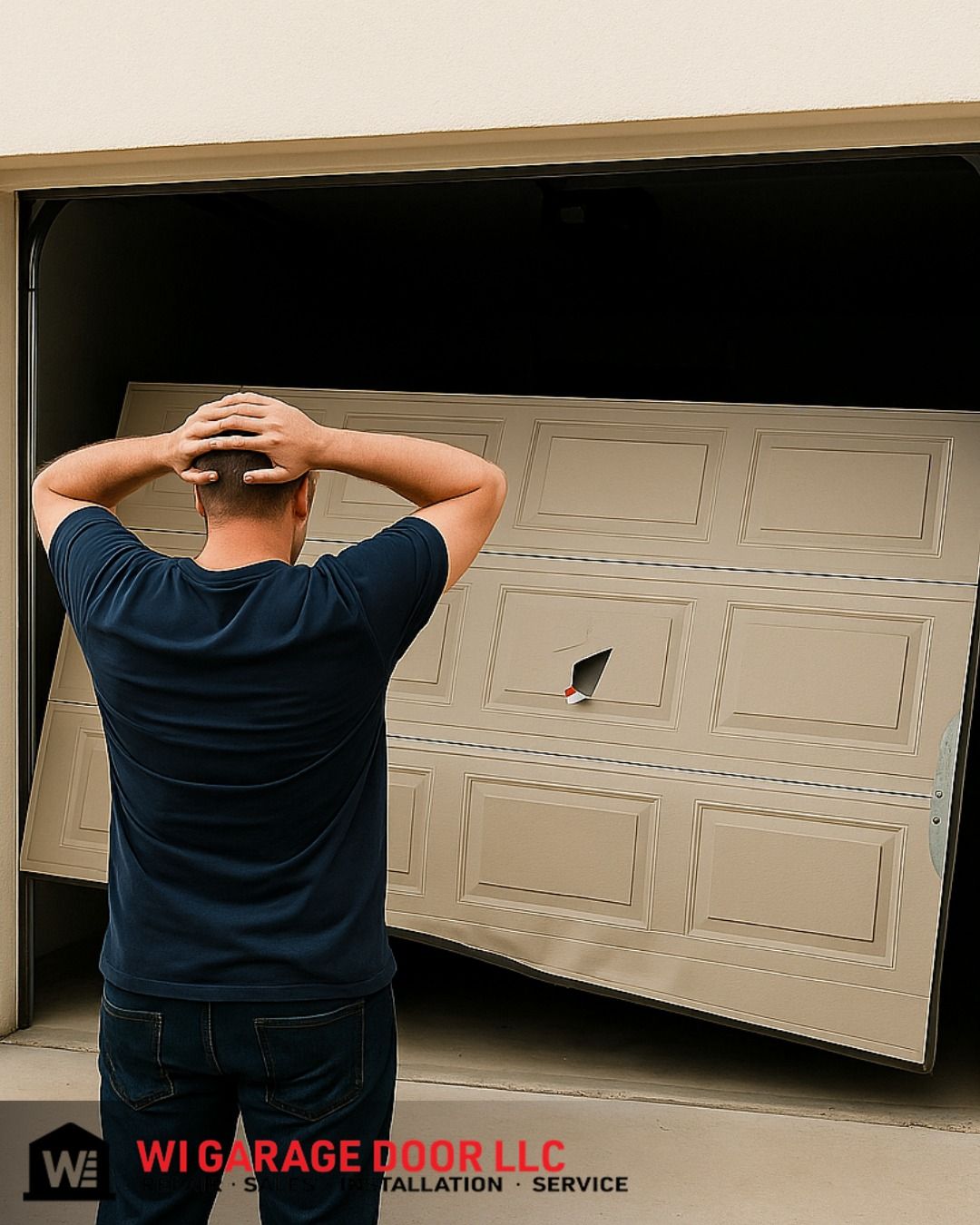
Man stands with hands on head as a garage door buckles inward under impact.
May 20, 2026
Essential questions to ask garage door repair De Pere technicians. Learn about experience, licensing, warranties, and emergency service options.
May 20, 2026
Learn how Wi-Fi and belt-drive garage door systems are transforming Green Bay homes with smart technology, enhanced security, and quiet operation for modern living.
Modern house exterior with a large gray garage door and driveway under a blue sky
May 20, 2026
Discover why belt-drive Wi-Fi openers are the smart choice for Green Bay homes. Learn about quiet operation, smart integration, and security features.
May 20, 2026
Learn how garage door springs work to counterbalance your door's weight, reducing strain on the opener and extending system lifespan with proper maintenance.
Garage door opener rail and hanging cord mounted on the ceiling
May 20, 2026
Garage door springs are essential for safety and security. Learn how they prevent accidents and protect your home from unauthorized access in this comprehensive guide.
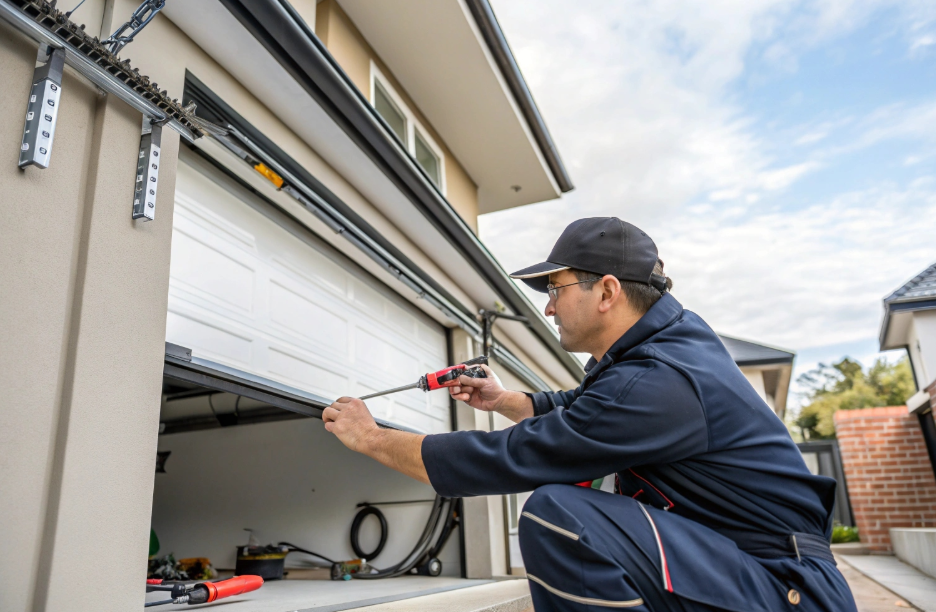
Worker installing a garage door opener on a ceiling track, using a drill beside an orange ladder.
May 20, 2026
Learn what happens when garage door springs fail, including sudden malfunctions, opener damage, and secondary system issues. Expert repair solutions from WI Garage Door LLC.
Worker adjusting a garage door opener rail with a red string guide
May 20, 2026
Identify worn garage door springs early with these key warning signs: slow movement, strange noises, visible damage, and difficulty opening.
May 20, 2026
Expert tips for garage door cable replacement including understanding cables, safety considerations, step-by-step replacement guide, and testing procedures for smooth operation.
Show More
Man stands with hands on head as a garage door buckles inward under impact.
May 20, 2026
Essential questions to ask garage door repair De Pere technicians. Learn about experience, licensing, warranties, and emergency service options.
May 20, 2026
Learn how Wi-Fi and belt-drive garage door systems are transforming Green Bay homes with smart technology, enhanced security, and quiet operation for modern living.
Modern house exterior with a large gray garage door and driveway under a blue sky
May 20, 2026
Discover why belt-drive Wi-Fi openers are the smart choice for Green Bay homes. Learn about quiet operation, smart integration, and security features.
Show More